
- Sub-categories:
- Sweet cherries26
- Sour cherry trees1
Cherry trees
Cherries are perhaps the most diverse member of the genus Prunus, which includes other popular stone fruits such as plums, peaches, and apricots. There are two main types, the sweet cherry Prunus avium (best for eating fresh) and the acid or sour cherry Prunus cerasus (best for culinary use).
Amber Heart
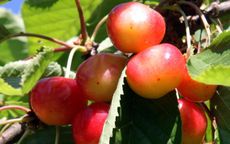 The most popular traditional English white cherry, widely known as Kent Bigarreau.
- Picking season: Mid
- Self-fertility: Not self-fertile
Aprikyra®
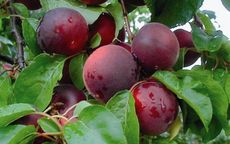 A sweet self-fertile apricot-cherry cross, also known as an Aprichery or Cherrycot
- Self-fertility: Self-fertile
Athos®
A natural dwarf sweet cherry tree, unlikely to get much bigger than 2m.- Picking season: Mid
- Self-fertility: Self-fertile
Black Oliver
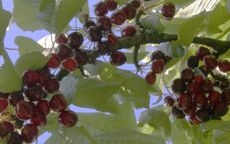 A traditional English black cherry from the West Midlands.
- Picking season: Mid
- Self-fertility: Not self-fertile
Burcombe
A dark red / black cherry from the Tamar valley.- Picking season: Late
- Self-fertility: Not self-fertile
Colney
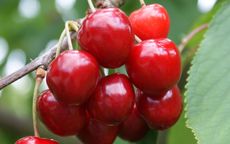 Colney is a large modern late-season English dessert cherry, dark red/black, with a good flavour.
- Picking season: Late
- Self-fertility: Not self-fertile
- Awards: RHS AGM (former)
Early Red Maraly®
Early Red is a modern dark red sweet cherry with a firm flesh.- Picking season: Early
- Self-fertility: Not self-fertile
Hertford
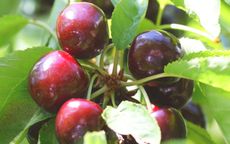 A large dark red English cherry with a good flavour.
- Picking season: Late
- Self-fertility: Not self-fertile
- Awards: RHS AGM (former)
Knight's Early Black
 A traditional English early-season black cherry
- Picking season: Early
- Self-fertility: Not self-fertile
Kordia
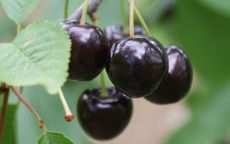 Kordia is a large late-season true black cherry variety with a good balanced cherry flavour.
- Picking season: Late
- Self-fertility: Not self-fertile
- Awards: RHS AGM (current)
Merchant
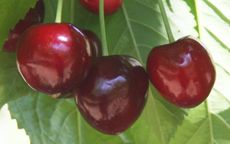 An early-season black/red cherry with a good flavour.
- Picking season: Early
- Self-fertility: Not self-fertile
- Awards: RHS AGM (current)
Merton Glory
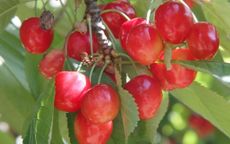 A well-known mid-season English white cherry.£58.75buy
- Picking season: Early
- Self-fertility: Not self-fertile
Napoleon Bigarreau
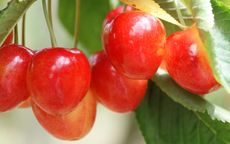 A traditional white cherry, with an excellent flavour and appearance.
- Picking season: Mid
- Self-fertility: Not self-fertile
Nimba®
Nimba is a modern large-fruited red sweet cherry, ripening right at the start of the cherry season.- Picking season: Very early
- Self-fertility: Not self-fertile
Pacific Red®
Pacific Red is a modern large-fruited red sweet cherry with a firm flesh.- Picking season: Early
- Self-fertility: Self-fertile
Regina
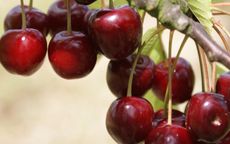 Regina is a new late-season sweet black cherry, with a good flavour and resistance to splitting.
- Picking season: Late
- Self-fertility: Not self-fertile
Skeena®
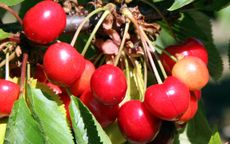 One of the best of the Canadian late-season cherries.
- Picking season: Late
- Self-fertility: Self-fertile
StardustTM
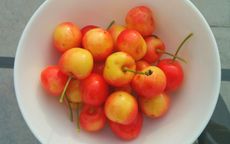 Stardust is a new mid-season white cherry which is also fully self-fertile.£65.50buy
- Picking season: Early
- Self-fertility: Self-fertile
Summer Sun
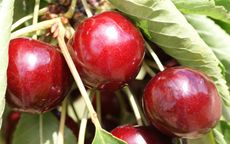 Summer Sun is productive mid-season cherry, and should ripen even if the summer weather is less than perfect.£58.75 - £64.50buy
- Picking season: Mid
- Self-fertility: Partially self-fertile
- Awards: RHS AGM (current)
Sweetheart
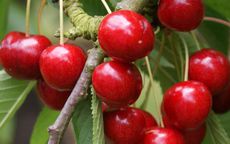 Sweetheart is one of the best-flavoured late-season cherries for the UK climate.£60.00 - £65.50buy
- Picking season: Late
- Self-fertility: Self-fertile
- Awards: RHS AGM (current)
Sylvia
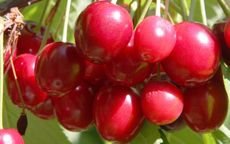 Sylvia produces large dark red sweet cherries, ripening in the middle of the cherry season. It is a naturally small tree and grows with a columnar form, useful if space is limited.
- Picking season: Mid
- Self-fertility: Not self-fertile
Tamara®
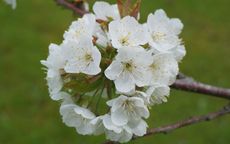 Tamara has probably the largest fruit size of any of the cherry varieties we offer.
- Picking season: Late
- Self-fertility: Not self-fertile
Waterloo
Waterloo is a traditional English sweet cherry with a red / black skin.- Picking season: Mid
- Self-fertility: Not self-fertile


Need more help choosing cherry trees?
See our guides and recommended collections: