
- Sub-categories:
- Eating plums34
- Plums for cooking11
- Dual-purpose plums17
- Japanese plums2
Plum trees
One of the easiest fruits to grow, we love plum trees and can advise on all aspects of choosing and planting them.
Belle de Louvain
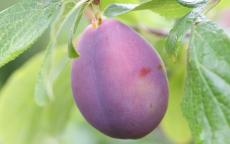 Belle de Louvain is a large purple culinary plum, useful because it can be grown on north-facing walls.
- Picking season: Mid
- Self-fertility: Partially self-fertile
- Flowering group: 3
Blaisdon Red
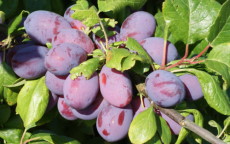 Blaisdon Red is one of the best plum varieties for making plum jam.
- Picking season: Mid
- Self-fertility: Not self-fertile
- Flowering group: 3
Blue Tit
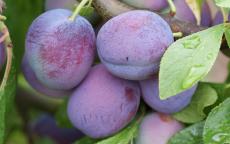 Blue Tit is a popular English dual-purpose plum, easy to grow, reliable cropping.
- Picking season: Mid
- Self-fertility: Self-fertile
- Flowering group: 4
- Awards: RHS AGM (current)
Cambridge Gage
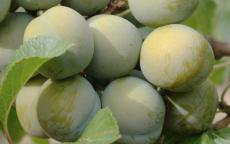 Cambridge Gage is a reliable green gage, similar to Old Green Gage, with an excellent flavour.£59.00 - £62.00buy
- Picking season: Late
- Self-fertility: Partially self-fertile
- Flowering group: 3
- Awards: RHS AGM (current)
Coe's Golden Drop
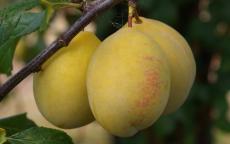 Coe's Golden Drop is a large oval gage from the 18th century, noted for its excellent flavour.
- Picking season: Very late
- Self-fertility: Not self-fertile
- Flowering group: 2
Czar
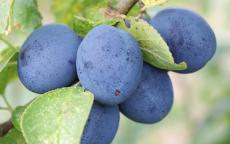 Czar is a traditional culinary plum, one of the easiest plums trees, will even fruit on north-facing walls.
- Picking season: Mid
- Self-fertility: Self-fertile
- Flowering group: 3
- Awards: RHS AGM (current)
Denniston's Superb
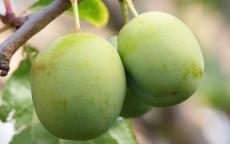 Denniston's Superb is a gage-like green plum, raised in New York in the 19th century.£59.00buy
- Picking season: Mid
- Self-fertility: Self-fertile
- Flowering group: 2
Early Transparent Gage
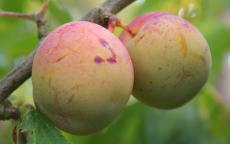 One of the easier gages to grow, Early Transparent has attractive semi-translucent fruit.£59.00buy
- Picking season: Mid
- Self-fertility: Self-fertile
- Flowering group: 3
Edda
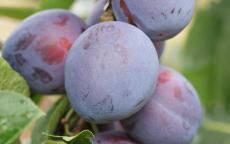 A good quality and cold-hardy early-season purple plum from Norway.
- Picking season: Early
- Self-fertility: Not self-fertile
- Flowering group: 2
Excalibur
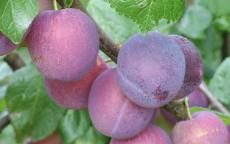 Excalibur is a red-purple plum, similar to Victoria but with a better flavour for eating fresh.
- Picking season: Mid
- Self-fertility: Not self-fertile
- Flowering group: 2
Flavor King
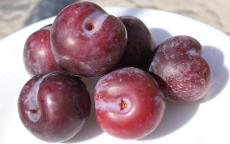 Flavor King is a pluot (Japanese plum / apricot cross) with large sweet fruit.
- Picking season: Late
- Self-fertility: Not self-fertile
- Flowering group: 1
Gordon Castle
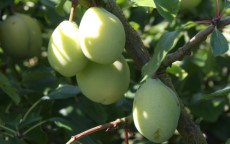 A good dessert plum for northern areas due to its hardiness.
- Picking season: Late
- Self-fertility: Not self-fertile
- Flowering group: 4
Hauszwetsche German Prune
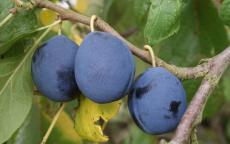 Hauszwetsche is a damson-like Quetsche or Zwetsche plum, ideal for German-style cakes and desserts.
- Picking season: Late
- Self-fertility: Self-fertile
- Flowering group: 4
Jefferson
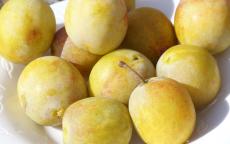 Jefferson is a a large yellow gage / plum, easy to grow, crops well, very juicy and great flavour.
- Picking season: Late
- Self-fertility: Not self-fertile
- Flowering group: 2
- Awards: RHS AGM (current)
Kea
Kea is a culinary plum from Cornwall, ideal for plum jam.- Picking season: Mid
- Self-fertility: Partially self-fertile
- Flowering group: 3
Kirke's Blue
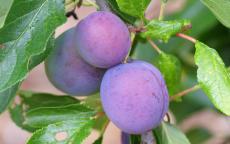 An old-fashioned blue plum with a rich sweet flavour.
- Picking season: Mid
- Self-fertility: Not self-fertile
- Flowering group: 3
Lindsey Gage
Lindsey Gage is a sweet-flavoured green gage, similar to Cambridge Gage.£59.00buy- Picking season: Late
- Self-fertility: Partially self-fertile
- Flowering group: 3
Malling ElizabethTM
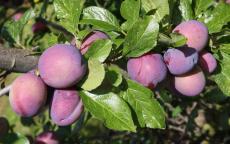 This new plum variety was released to celebrate Queen Elizabeth's platinum jubilee.£61.00buy
- Picking season: Early
- Self-fertility: Partially self-fertile
- Flowering group: 2
Marjorie's Seedling
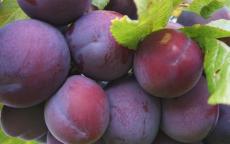 Marjorie's Seedling is an easy to grow, late-season, heavy cropping purple/black plum.£59.00 - £62.00buy
- Picking season: Late
- Self-fertility: Self-fertile
- Flowering group: 3
Meritare
An attractive new early-season dessert plum from Sweden, similar to Opal, with large fruits and good cold-hardiness.- Picking season: Early
- Self-fertility: Not self-fertile
- Flowering group: 3
Methley
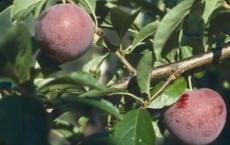 Methley is a Japanese plum (Prunus salicina), as opposed to the more usual European plums (Prunus domestica).
- Picking season: Early
- Self-fertility: Self-fertile
- Flowering group: 1
Old Green Gage
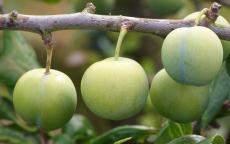 The definitive gage - Old Green Gage is arguably the best-flavoured of any plum variety.£59.00 - £62.00buy
- Picking season: Late
- Self-fertility: Not self-fertile
- Flowering group: 3
Oullins Golden Gage
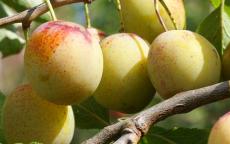 The flavour of a true gage yet also easy to grow, Oullins Golden Gage is a good first gage tree.£59.00 - £62.00buy
- Picking season: Mid
- Self-fertility: Self-fertile
- Flowering group: 4
- Awards: RHS AGM (current)
Purple Pershore
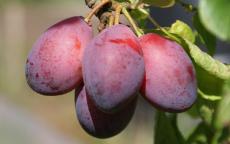 Very similar to Yellow Pershore and with the same excellent culinary qualities.
- Picking season: Mid
- Self-fertility: Self-fertile
- Flowering group: 4
- Awards: RHS AGM (former)
Queen's Crown
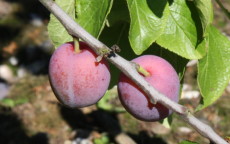 Queen's Crown is a dual-purpose red plum with a good sweet flavour.
- Picking season: Late
- Self-fertility: Not self-fertile
- Flowering group: 3
Reeves
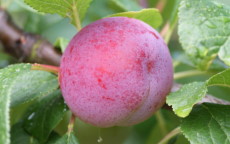 A high-quality English dual-purpose plum, similar to Victoria but with an improved flavour for eating fresh.
- Picking season: Mid
- Self-fertility: Not self-fertile
- Flowering group: 3
- Awards: RHS AGM (former)
Reine Claude de Bavay
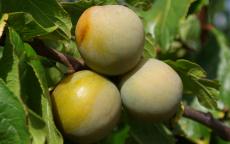 The most widely-grown green gage, Reine Claude de Bavay has the distinctive gage-like flavour.
- Picking season: Late
- Self-fertility: Self-fertile
- Flowering group: 3
Reine Claude Doree
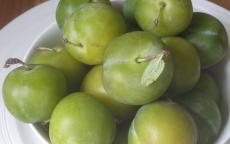 A high-quality yellow-green gage, and usually more productive than other green gages.
- Picking season: Late
- Self-fertility: Not self-fertile
- Flowering group: 3
Reine Claude Violette
A traditional French gage first recorded in the 18th century, noted for its excellent flavour. Also known as Purple Gage.- Picking season: Late
- Self-fertility: Not self-fertile
- Flowering group: 3
Rivers' Early Prolific
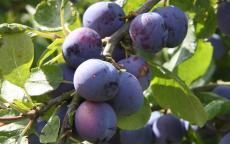 Early Prolific is a very heavy-cropping early-season plum, raised by the famous Rivers nursery.£59.00buy
- Picking season: Early
- Self-fertility: Self-fertile
- Flowering group: 2
Sanctus Hubertus
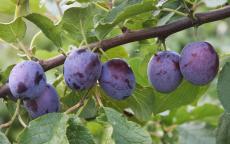 One of the best cropping early-season plums.
- Picking season: Early
- Self-fertility: Not self-fertile
- Flowering group: 3
- Awards: RHS AGM (former)
Seneca
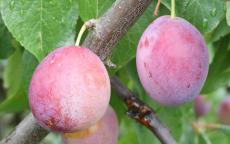 Seneca is a high-quality late-season large American plum with a notably sweet flavor.
- Picking season: Late
- Self-fertility: Not self-fertile
- Flowering group: 3
Stella's Star
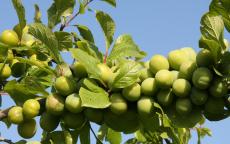 A modern green-gage, more productive and easier to grow in the UK than the traditional ones.£60.50 - £62.00buy
- Picking season: Mid
- Self-fertility: Self-fertile
- Flowering group: 3
Swan
Best seller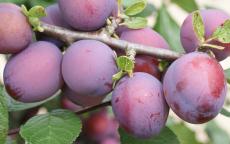 A popular traditional English dual-purpose red / purple plum.
- Picking season: Late
- Self-fertility: Not self-fertile
- Flowering group: 3
Thames Cross
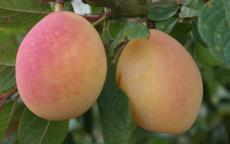 An attractive yellow mid-season plum with a good flavour.
- Picking season: Mid
- Self-fertility: Partially self-fertile
- Flowering group: 3
Toptaste Kulinaria®
A new blue dessert plum with sweet yellow flesh, and good disease resistance.£60.50buy- Picking season: Mid
- Self-fertility: Partially self-fertile
- Flowering group: 3
Warwickshire Drooper
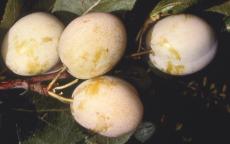 Warwickshire Drooper is a good quality dual-purpose yellow plum, with heavy crops.
- Picking season: Late
- Self-fertility: Self-fertile
- Flowering group: 2
Willingham
A traditional English green gage, with a reputation for excellent flavour.£59.00buy- Picking season: Late
- Self-fertility: Not self-fertile
- Flowering group: 3
Yellow Pershore
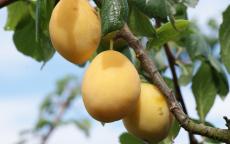 Also known as Yellow Egg, Yellow Pershore is a self-fertile heavy cropping culinary plum.
- Picking season: Mid
- Self-fertility: Self-fertile
- Flowering group: 4


How to choose Plum trees
If you are new to growing fruit trees, plum trees make an excellent choice. Plum trees are easy to grow - usually easier than apples and pears - and require very little training or pruning. The only horticultural challenge is that plums flower quite early in spring, so locations that are prone to frosts are best avoided (or choose a late-flowering or frost-resistant variety). They thrive in most conditions, but they prefer water-retentive soils, and mulching is therefore particularly important for plum trees - farmyard manure is ideal.
Unlike most apples and pears, many plum varietes are self-fertile or partially self-fertile and do not need a pollination partner. For plum varieties that are not self-fertile, another plum tree of a different variety flowering at the same time is usually all that is necessary to ensure good pollination and heavy crops - there are few of the pollination incompatibilities found with apples, pears and cherries.
Plums are also more nutrient-rich than apples or pears, and comparable to some other "superfoods" such as blueberries. Although plum trees do suffer from a range of diseases, they seem to catch them less often than other fruit varieties. Most important of all, the flavour of ripe home-grown plums is vastly superior to shop-bought fruit. Indeed in our opinion freshly-picked dessert plums can offer the most exquisite sweet flavours of any fruit available from the temperate garden.
We offer mostly 'European' plum trees - from the species Prunus domestica. European plums have a much better and more interesting range of flavours than the 'Japanese' plums usually found in supermarkets. Most garden plum trees in Northern Europe are of this species, and they are well suited to temperate climates, being hardier than the Japanese varieties and flowering later. Whilst European plums do not store particularly well, the fruit usually ripens over a 1-2 week period, during which time the tree can be picked daily to ensure a steady supply of fruit.
There is also a sub-group of European plums known as Gages, usually ranked within the species Prunus domestica, but sometimes sub-categorised as the "Reine Claude" group. Gage trees look similar to plum trees but the fruits are smaller and rounder than European plums, and either green or golden/yellow in colour. Gage trees prefer slightly warmer growing conditions than other European plums to bring out their full flavour, and their natural home is France - but they can be grown in any temperate climate. Gages have a unique distinctive rich sweet flavour, somewhat like an intense melon.